Amazing Song Bags 乙颂
Amazing Song opened in winter 2013 in a Beijing shop of just over ten square metres. Its history charts an entire commercial era: private WeChat customers, customer-financed e-commerce, blogger seeding and a breakout soft bag.
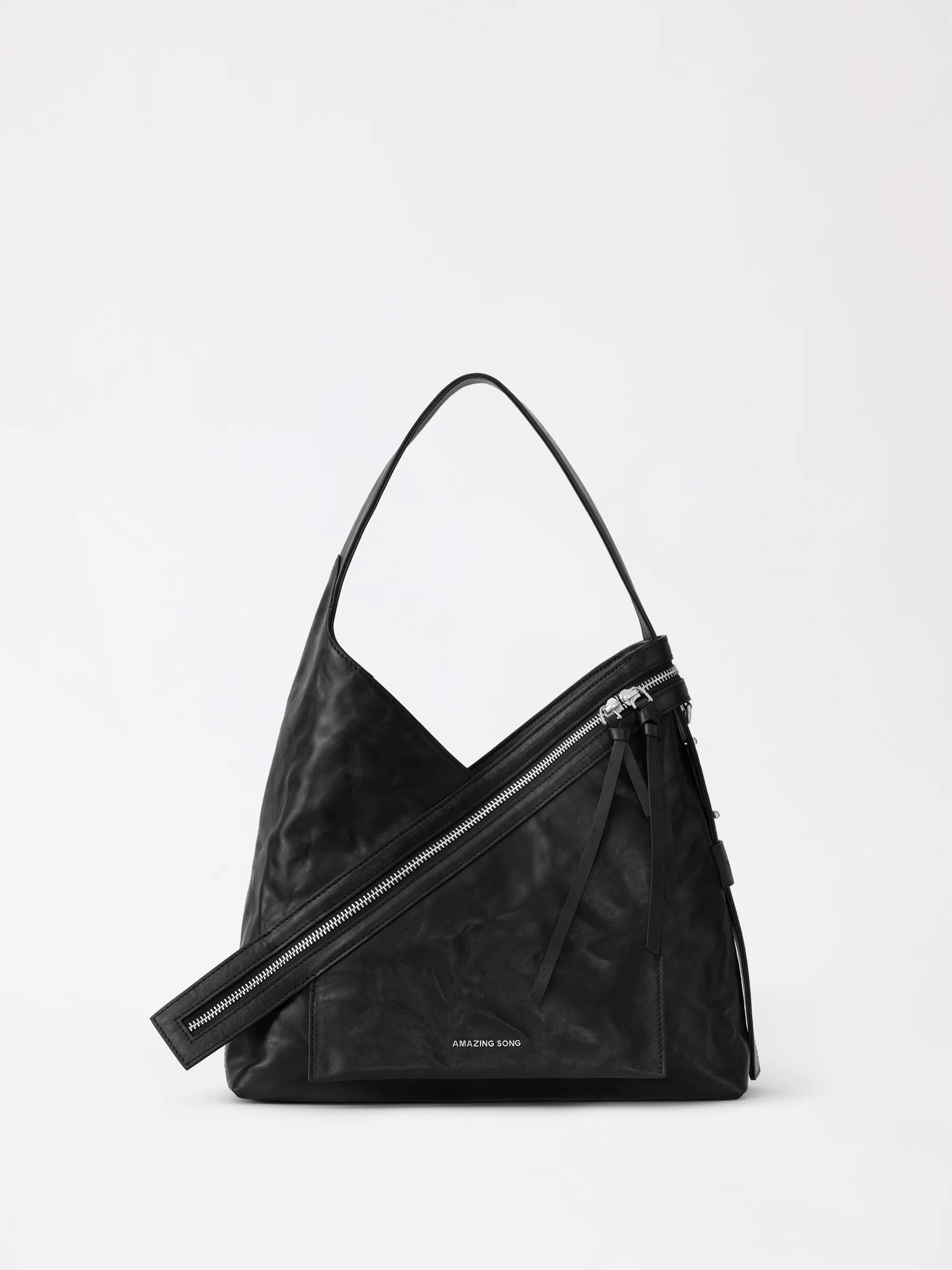
From a ten-square-metre shop to the Soft Euro bag
Amazing Song’s first store opened in the winter of 2013 on Xueyuan Road, Beijing. It measured just over ten square metres. People sometimes assumed it was a multi-brand boutique because it carried relatively few products. Founder Zhang Nana, 张娜娜, known as Nina Zhang, says everything inside carried Amazing Song’s own name, trademark, tags and designs.
Zhang had studied fashion design and then worked at an advertising company serving industry exhibitions. She understood parts of the fashion supply chain, but her available capital made launching a clothing label look unrealistic. Bags presented a narrower opening — she already collected them and paid close attention to structure, material and craft.
Six months before the shop opened, Zhang began developing the products. She lived in Beijing and travelled to Guangzhou each month to work with suppliers. The early customers came from the universities, offices and foot traffic around Xueyuan Road. The shop accumulated thousands of private WeChat contacts, creating a customer base that would matter later.
Amazing Song expanded to more than ten physical stores and achieved modest profits, according to Zhang. By 2019 she had concluded that stores alone would not create the national brand she wanted. Old customers contributed a combined RMB 2 million to fund a new e-commerce team. The first half-year produced little.
Then the pandemic emptied the offline network. During home working in early 2020, the team began using bloggers to create product photography and styling content with more atmosphere than conventional catalogue images. The initial purpose was better imagery. The approach also generated sales and pushed the company into influencer-led e-commerce.
Delivery pressure created another turn. Zhang travelled to Guangzhou in April 2020 when factories were closed and orders were backing up. She rented a warehouse, recruited experienced workers and assembled a small factory. The wider team later moved from Beijing to Guangzhou to stay close to the bag supply chain. Zhang says sales passed RMB 20 million in 2020 and RMB 100 million in 2021 — founder testimony rather than audited accounts.
The product that fixed the brand in customers’ minds was the 软欧包, or Soft Euro bag. Zhang says its shape escaped conventional bag structures while remaining practical and easy to wear. Celebrity use brought exposure; customers sustained it. The Donut hobo and Half Moon bag followed as recognisable shapes.
The design language is deliberately cheerful — simplicity plus colour, with a “colourful and healing” character Zhang says has existed since the beginning. The silhouettes changed as the market moved from rigid mini bags toward softer, larger and more relaxed forms. The use of colour remained.
Amazing Song matters because its history charts an entire commercial era in Chinese fashion: a tiny self-owned store, private WeChat customers, customer-financed e-commerce, blogger seeding, livestream exposure, proximity to Guangzhou production, and a breakout soft bag. Its origin story is also a warning. The founder now says the influencer model that once produced sales has become far less efficient. The brand born through social commerce is already learning how to live after the easy version of social commerce.
Record
- 乙颂
- Not verified
- Guangzhou
- Not verified
- Not verified
- 2013
- Zhang Nana 张娜娜 (Nina Zhang)
- Not verified
- handbags, leather goods
- Ships from the brand's own store
On the date: 2013 is the opening of the first store on Xueyuan Road, Beijing, per the founder interview.
Read from the brand's own shop
2026-09-15 · market en-US
- Half the shop is above
- US$169.99
- US$29.99 to US$329.99 across everything listed
- Objects listed
- 80
- 79 available, 1 sold out
- On sale today
- 0
- Nothing discounted in this reading
- Newest arrival
- 2026-09-02
- By the brand's own publication date
Read from Amazing Song's public catalogue on 15 September 2026 and refreshed every day. The figures cover every object the shop lists, accessories and charms included, so the median is not a handbag price.
MEI sells none of this and earns nothing from it. It is listed at the brand's own shop ↗. See which Chinese fashion is selling out fastest.
What remains unverified
Reported — awaiting brand fact-check- The official international site says three sisters co-founded the brand, but only Nina Zhang is identified in the accessible Chinese founder interview. The other two are unnamed and their roles undescribed.
- Zhang says she registered 首末公司 before opening. The exact legal entity and trademark chain are unverified.
- Revenue, investment returns, store count and factory staffing are self-reported in the founder interview and unaudited.
- The precise launch year of the Soft Euro bag 软欧包 is not stated in the accessible source.
Sources
- Primary · officialAmazing Song official Instagram — brand's own use of 乙颂 ↗
- Primary · interviewTencent News and Pangjing, interview with founder Nina Zhang ↗19 May 2026
- Primary · officialAmazing Song official brand story ↗
A source being official establishes what the brand says. It does not independently establish sales, sourcing, manufacturing quality, awards or social impact — those remain attributed until MEI obtains records, institutional confirmation or firsthand product testing.