BAMPO Bags 半坡饰族
Huang Lang encountered the Neolithic human-face and fish-pattern basin from the Banpo site and asked why that beauty should stay behind glass. He founded 半坡饰族 in Chongqing in 1997.
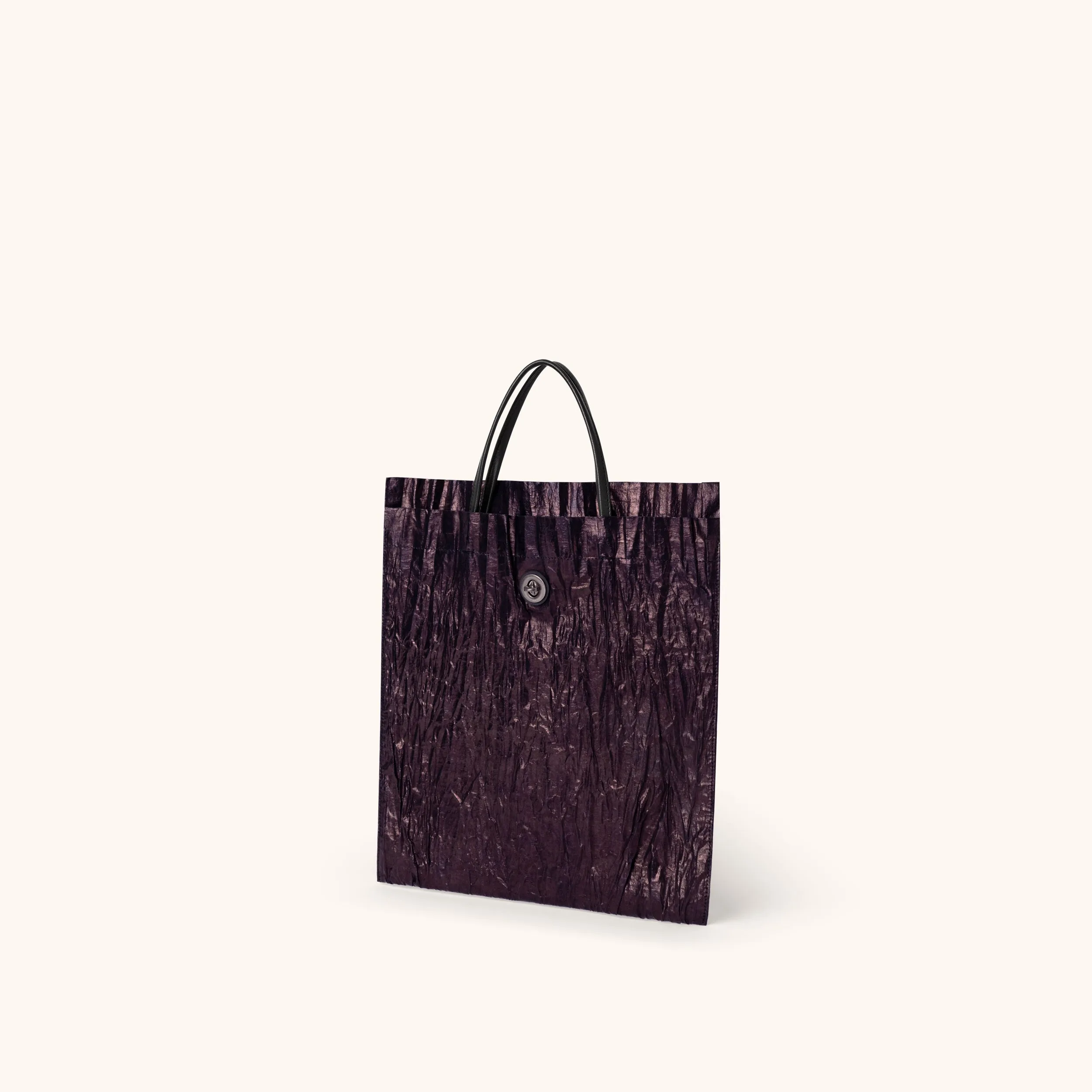
The museum object that refused to stay behind glass
BAMPO’s story begins with an ancient painted basin.
Founder Huang Lang, 黄浪, encountered the human-face and fish-pattern basin associated with the Banpo archaeological site. The object came from a Neolithic settlement near Xi’an and is generally dated to roughly 6,000 years ago. According to the brand’s account, Huang was struck by a simple question: why should this beauty remain behind glass?
He founded 半坡饰族 in Chongqing in 1997. A 2024 interview published by the Guangzhou Baiyun district media centre gives the same year and city, and says the company moved to Junhe subdistrict in Baiyun, Guangzhou, in 2003. The current official international site also dates the brand to 1997 and identifies Huang as an artist and founder.
For Huang, the Banpo basin showed that art was already part of everyday life thousands of years ago. His stated project was to continue that pursuit of beauty through contemporary objects. “We are simply continuing and inheriting our ancestors’ pursuit of beauty,” he told the Baiyun reporter, “combining it with contemporary aesthetics so that traditional culture gains a sense of the time and an international language.”
The name also became a statement about ambition. Huang explains 半坡 — literally halfway up a slope — as a position with room to climb: no pride of the summit, no discouragement of the foot of the mountain, only upward force.
BAMPO developed a recognisable language from Chinese gardens, painting, ceramics and folk craft. Its Yiyuan collection, 怡园, drew from the architecture and scenery of Suzhou gardens. According to the Baiyun report, designers repeatedly visited the Master of the Nets Garden, translating eaves, garden rocks and layered spaces into leather construction. The company later worked with Dong cloth and Dong craft traditions from Guizhou.
This history separates BAMPO from younger labels that use softness mainly as a contemporary silhouette. BAMPO’s current Flow hobo may participate in that visual movement, while the company’s larger identity comes from treating the handbag as a carrier of cultural imagery. Its strongest designs try to move heritage from the museum and the scenic site into an object handled every day.
That ambition also produces claims requiring scrutiny. The Baiyun article describes BAMPO as China’s leading original art-handbag brand and says its Yiyuan bag entered the collection of the world’s largest handbag museum. It reports international design awards and government cultural-export recognition. The article includes founder quotations and brand-supplied images, making it a valuable primary interview and a less reliable source for independent evaluation.
A second uncertainty concerns authorship. The official site and the government interview identify Huang Lang as founder. Chinese biographical pages describe designer Xie Xiaorui, 谢晓蕊, as chief designer and one of the founders. MEI has not located a primary interview or corporate record clarifying when she joined, her ownership role, or which collections she designed.
BAMPO’s origin story remains compelling in its verified core. A Chongqing artist saw an ancient domestic object, rejected its confinement to a display case, and built a bag company around the idea that cultural memory should circulate through daily life.
Record
- 半坡饰族
- Not verified
- Guangzhou
- Not verified
- Not verified
- 1997
- Huang Lang 黄浪
- 广州半坡饰族品牌管理有限公司 (relationship to 广州市蕊蝶皮具有限公司 pending verification)
- handbags, leather goods
- Ships from the brand's own store
On the date: Founded in Chongqing in 1997; moved to Junhe subdistrict, Baiyun, Guangzhou in 2003.
Read from the brand's own shop
2026-09-15 · market en-US
- Half the shop is above
- US$359
- US$0 to US$1,880 across everything listed
- Objects listed
- 88
- 86 available, 2 sold out
- On sale today
- 0
- Nothing discounted in this reading
- Newest arrival
- 2026-09-14
- By the brand's own publication date
- Sizes offered
- S · M · L
- Letter sizing only; numbered runs are not comparable between shops
Read from BAMPO's public catalogue on 15 September 2026 and refreshed every day. The figures cover every object the shop lists, accessories and charms included, so the median is not a handbag price.
MEI sells none of this and earns nothing from it. It is listed at the brand's own shop ↗. See which Chinese fashion is selling out fastest.
What remains unverified
Reported — awaiting brand fact-check- Xie Xiaorui 谢晓蕊 is described elsewhere as chief designer and one of the founders. Her exact role and start date remain unresolved through a primary source.
- The relationship among 广州半坡饰族品牌管理有限公司, 广州市蕊蝶皮具有限公司 and the current international storefront requires registry verification.
- Museum accession, international awards, cultural-export listings and fashion-week appearances require confirmation from the named institutions.
- The official account does not identify the first commercial bag or the first store address.
- Claims about natural dyes, Dong-community collaboration and community benefit are currently first-party claims.
Sources
- Government media · interviewGuangzhou Baiyun district media centre, interview with Huang Lang ↗23 January 2024
- Primary · officialBAMPO official brand history ↗
- Primary · officialBAMPO official explanation of its name ↗
A source being official establishes what the brand says. It does not independently establish sales, sourcing, manufacturing quality, awards or social impact — those remain attributed until MEI obtains records, institutional confirmation or firsthand product testing.